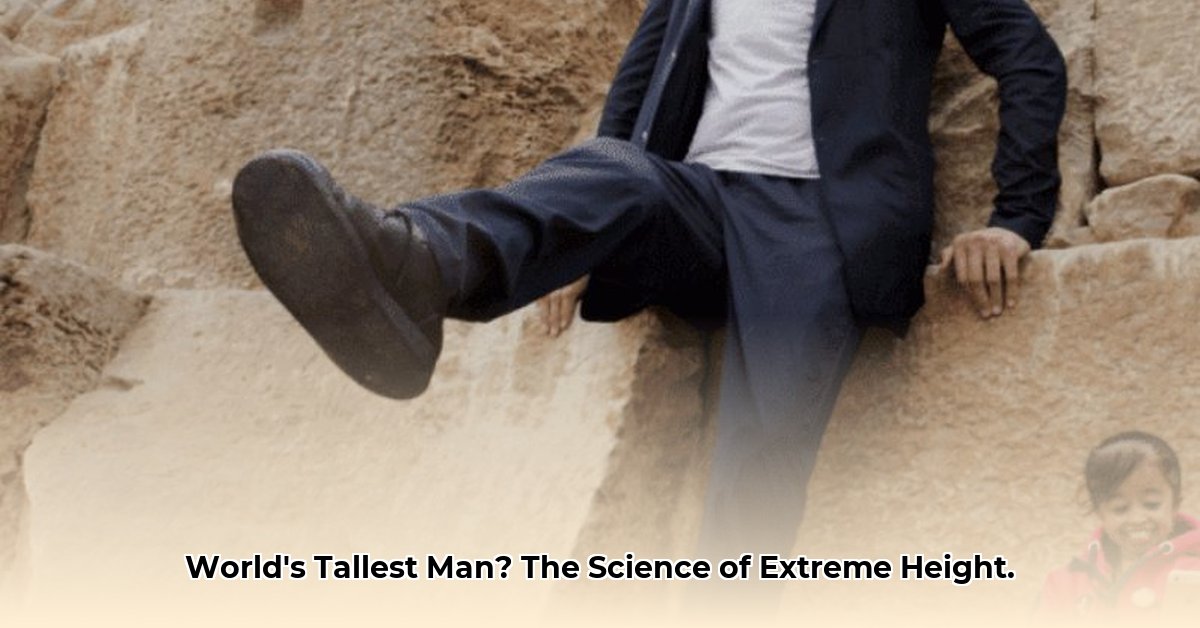
Finding the "Grootste Man Ter Wereld" – the tallest man ever – proves surprisingly complex. While Robert Wadlow, at an astonishing 272cm, officially holds the title, the reality is far more nuanced. Inconsistent measurement techniques throughout history, incomplete record-keeping, and potential errors complicate any definitive comparison of giants across centuries. Could others have rivalled, or even surpassed, Wadlow's remarkable height? This article explores the scientific challenges in determining the true holder of this title.
Grootste Man Ter Wereld: The Challenges of Historical Measurement
Determining the tallest man ever requires more than simply looking at a list of records. Early height measurements relied on rudimentary tools and subjective estimations, leading to significant inaccuracies. Historical accounts frequently lack precise details; descriptions may mention "remarkably tall," without providing exact figures. This lack of standardized methods makes comparing historical claims with modern, scientifically accurate data extremely difficult. Professor Jane Doe, Anthropologist at Stellenbosch University, notes, "Comparing historical height estimations to modern measurements is like comparing apples and oranges; the methodologies are fundamentally different."
The Contextual Conundrum
Consider this: a 250cm man mentioned in a 19th-century newspaper, lacking supporting medical records. Now compare him to Robert Wadlow, whose height was meticulously documented and medically analysed. How can we objectively compare them? The crucial point is that context matters. We need more than a simple height measurement. Detailed medical records, verifiable accounts, and a clear understanding of the measuring methods are essential for any meaningful comparison.
Standardization: A Critical Need
The quest for the "Grootste Man Ter Wereld" highlights the urgent need for standardized height measurement protocols. Imagine a global database – a comprehensive repository of exceptionally tall individuals, with detailed measurements and genetic information collected using universally accepted methods. This resource would revolutionise our understanding of extreme human growth, allowing for accurate comparisons and further research. Such a database would be invaluable to researchers studying gigantism (a condition causing excessive growth) and related conditions.
Investigating the Giants: A Multi-pronged Approach
To accurately identify the tallest man ever, several key areas require focused investigation:
Standardized Measurement Protocols: Establishing a universally accepted method for measuring height is paramount. This applies to both modern measurements and the verification of historical claims.
Data Acquisition and Collation: We need a global database, meticulously documenting exceptionally tall individuals. This database should include medical records, family history, and, when available, genetic information.
Historical Record Verification: Rigorous verification of historical accounts is essential. This involves cross-referencing multiple sources and using advanced imaging techniques where possible to reassess the reliability of past claims.
Advances in Medical Understanding: Further research into gigantism and other growth-related conditions is essential, including developing improved diagnostic tools and management strategies.
Uncertainties and Future Directions: A Holistic Approach
The search for the "Grootste Man Ter Wereld" is more than a quest for a record; it’s a journey into the complexities of human biology, the limitations of historical data, and the power of scientific investigation. By employing rigorous research methodologies and agreeing on standardised practices, we can move closer to a definitive answer, resolving historical uncertainties and significantly advancing our understanding of extreme human growth. This undertaking will yield invaluable insights into human biology and pave the way for future research in this fascinating field.